When I first started making photographs that I actually liked, I ran into a problem I hadn't expected.
I didn't know where my work belonged.
Like many photographers starting out, I shared images in Facebook groups. That was one of the few places where it felt possible to show your work and get feedback. But after a while, it started to feel like throwing photographs into a river of other photographs.
Images came and went quickly. There was no context. No real connection. No sense of building something around the work itself.
You could take classes or attend workshops and meet other photographers that way, but outside of those environments I wasn't sure how photographers actually moved from making photographs to being visible as artists.
Within the first couple of years--once I began feeling comfortable with my photography--I started noticing that this struggle was everywhere.
Many photographers were doing thoughtful, meaningful work, but they had no real structure around how that work existed in the world.
No intentional website. No curated portfolio. No artist statement. No clear place for their work to live.
It wasn't just a technical problem.
It was a visibility problem. The Mistake I Made Like many photographers early in their journey, I made a mistake that seems obvious in hindsight.
I started copying what other photographers were doing.
I tried to make similar images. I followed the patterns that seemed to work for others. I assumed that if I just did what successful photographers were doing, eventually things would fall into place.
But the deeper issue wasn't technique.
The deeper issue was confidence.
For a long time I didn't believe I had a voice as a photographer. I didn't believe that my work was relevant or that I had something meaningful to contribute.
That's a difficult place to be as an artist.
You're creating work, but you're not sure it matters.
You feel like your photographs are just part of the noise instead of part of the signal. The Moment Things Began to Change For me, the shift started with exhibitions.
They weren't big, high-profile exhibitions. In fact, many of them were relatively low-risk opportunities. But they forced me to take my work seriously in a new way.
Preparing work for exhibition required intention.
I had to think about the photographs together as a body of work. I had to present them clearly. I had to talk about what they meant and why they mattered.
Those early experiences helped me cross a psychological threshold.
They helped me realize that building a creative presence is a different discipline than learning photography itself.
Photography teaches you how to make images.
But visibility requires you to step forward and claim space for your work. Helping Other Photographers As I grew more comfortable with my own work, something interesting began happening.
I started noticing other photographers who were making great images but struggling with the same challenges I had faced.
They lacked confidence. They didn't have a website. They didn't know how to organize their work or present it publicly.
Often the work itself was strong.
What was missing was structure.
I found myself sitting down with people and helping them imagine what their creative future could look like--how their work might be shared, where it could live, and how they could build something meaningful around it.
A lot of that work was about building confidence and helping people see that they knew more than they thought they did. The Idea Behind the Visible Artist Over time, those conversations led me to an idea I now call the Visible Artist System.
At its core, the idea is simple.
A visible artist is someone who:
Creates with intention- Develops a voice through their medium- Shares their work publicly- Builds a structure that allows others to encounter that work
Many photographers learn how to make images.
But very few are shown how to establish a visible creative presence around those images.
Recently I decided to formalize the process I've been using with other photographers into something more structured.
I'm launching a small 8-week cohort called the Visible Artist System to help photographers establish that presence.
The goal isn't simply to talk about ideas.
It's to build the foundational pieces that allow your work to exist in the world--things like a website, a curated portfolio, an artist statement, and a clear way for people to encounter your work. An Invitation If you're a photographer who feels like your work exists somewhere between private practice and public visibility, you're not alone.
Many artists reach a point where the work is ready, but the structure around it isn't.
Over the next few weeks I'm offering a limited number of 20-minute coffee chats for photographers who are curious about the cohort or simply want to talk about where they are in their creative journey.
No pressure--just a conversation.
You can learn more about the Visible Artist System here:
https://tomalvarez.com/visible-artist-system-2/
Or request a coffee chat here:
https://tomalvarez.com/visible-artist-coffee-chat/
Either way, I hope more photographers begin stepping forward and establishing a visible creative presence around their work.

I am standing alone on the shores of Two Jacks Lake located in Banff National Park in Alberta, Canada. I am unaware that the park's bears also enjoy the same shoreline in late autumn - which just happens to be now. Posted nearby are warning signs about those bears, and that hiking my hiking alone would incur a fine, should I be tempted to do so.
To my right are some waterfowl occasionally squawking to one another about my whereabouts as I move along the shore. Other than the birds, I'm alone. It's quiet, and the sun is rising behind the mountains in front of me. There's a slight haze in the air from distant fires making rays of sunlight appear closer to focused spotlights in the distance.
This moment is just the first step of a bigger journey about self, art, love, and healing.
This first post on Patreon is the same. It's the beginning of a new way forward in art and connection. I love what I do in the arts. The arts have changed my life in such profound ways it's hard to explain. I've discovered who I am, what I'm supposed to do, and how I needed to change my life for the better, no matter how painful the outcomes could be. Sometimes, all I can leverage is my faith and keep going.
This is my invitation to you: come with me on my journey. I have much to do and little time to do it. I have books in the works, am on the hunt for future speaking engagements, and have workshops - both free and paid - coming soon. On this platform, I'm going to be offering monthly subscriptions for prints and cards as well as enabling you to see what I do behind the scenes.
Join me. Any contribution of support would mean the world to me.
"It's a nice day for a white wedding," bellows from the tinny gas station speakers overhead.
I smile to myself, envisioning Billy Idol's mischievous half-sneer-half-smile under his platinum-blonde hair, gyrating on my cathode ray television - MTV logo in the bottom-right corner.
"This is fitting..." I think. What else would be playing at a Holiday Station in Duluth, Minnesota, at almost one in the morning?
I smile again, nodding in approval of the moment.
An entire work-day's hours earlier, I was packing up my camera gear, preparing to drive to photograph the lighting of Split Rock Lighthouse for its 111th birthday. I enjoy the drive; I'm always on my way to a fun time. The only negative of the trip is my Armada has an exhaust issue, and is beginning to sound like a 1979 GMC truck. I only know this because I drove a 1979 GMC truck - complete with Swiss cheese exhaust - to high school. The sound of an exhaust system with a hole is awful. It's the only thing I hear while I'm driving.
If you're not a local, Split Rock Lighthouse beacon only lights up a couple of times a year - the SS Edmund Fitzgerald sinking memorial, and an occasional special event.
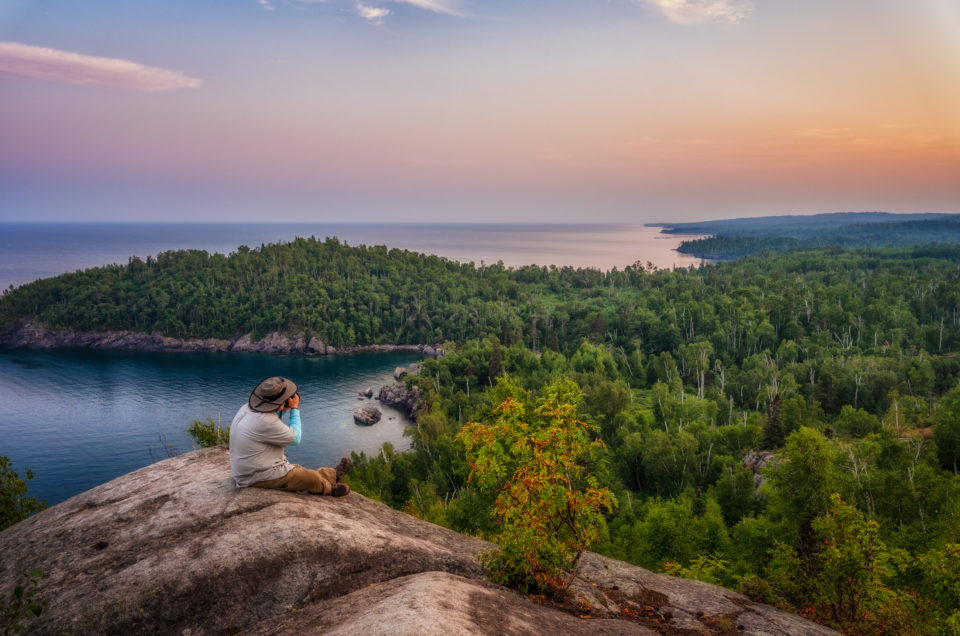
About forty-five minutes later than planned, I finally got to the lighthouse scenic overlook parking area. My friend and fellow photographer, Steve Hadeen, was patiently waiting by his car. I notice he's dressed for the bugs. I changed out of my long pants and shoes, opting for shorts, sandals, and wool socks, at a rest stop an hour-and-a-half before my arrival. It was just too uncomfortable to drive with Fjallraven adventure pants on. I hop in the back seat and change back into my adventure pants, a long-sleeve T-shirt with another over it, slather myself in bug repellent, grab my headlamp, and a cap.
Neither Steve, nor I, had ever been to Day Hill, an area a short hike from the road where we are parked. It offers a view of the lighthouse in line with Ellington Island, a rocky, well, island, in the bay below the cliff Split Rock Lighthouse sits atop. I've tried to find this location for a while. The hike to the overlook is relatively easy.
Once we reached the top of Day Hill, and made our way to the far side, out to some rock outcroppings, I recognize the view to the lighthouse. This is the place I've wanted to find.
Early at Split Rock Lighthouse
After scouting locations to setup our gear, Steve and I decide to have a look around the area. In the opposite direction, away from the lighthouse, was an additional overlook facing south. Steve grabbed a seat while we watched the sun set. I thought it was a perfect moment.
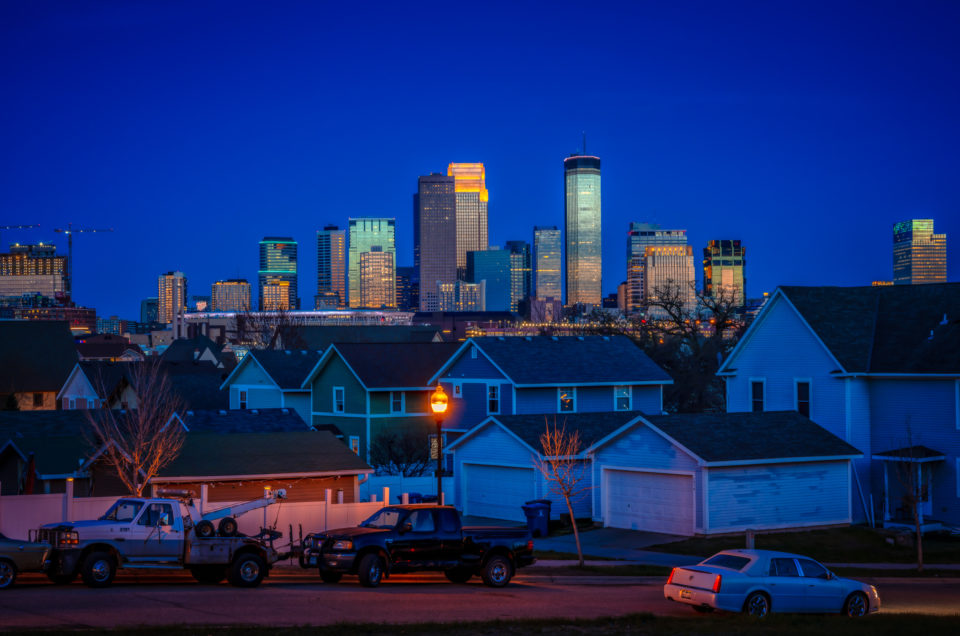
The city of Minneapolis is lit by the fading sun as seen from the northwest suburbs.
The city is facing a crisis right now, and this image highlights that the spotlight is on, and everyone is watching.
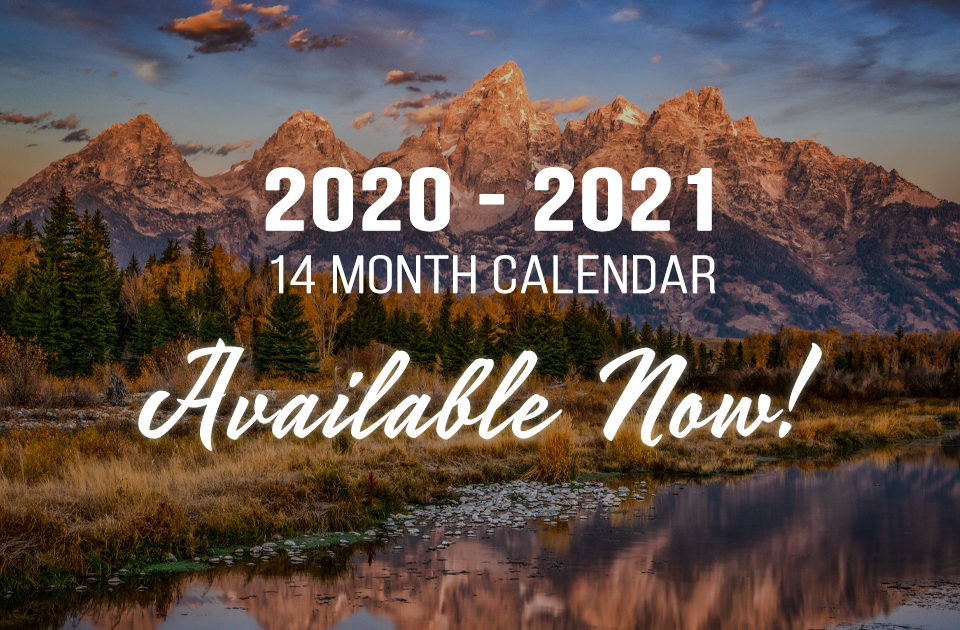
2020 has been quite a year, and I was afraid I would not be able to get out and use my camera. Some bigger plans had to be temporarily set aside, but I was still able to see some new, and old, places unencumbered.
Featured in my 2021 calendar are some places I've seen for the first time, like Dell's Mill in Wisconsin, and the view from one of the Signal Mountain Overlooks in Grand Teton National Park in Wyoming. Some of the others are local favorites, i.e. Splitrock Lighthouse in Two Harbors, Minnesota, and Minnehaha Falls in Minneapolis.
Choosing an image is a painstaking affair, which at first would seem easy, until you realize you have to pick a subset of your favorite photos, and even then, some of them won't make the final cut. One cannot do this without pain. It's not picking a favorite child, but it feels like it, in a way.
This year, I was able to design my own rear cover page which presented another challenge. I really like how it turned out, though. It helps illustrate the cohesion necessary in a calendar, rather than just a random smattering of images pushed together, read: my usual style.
Three Ways To Buy
This year, I'm offering 30 signed versions. I will be doing an initial order, signing them, and shipping them out again. I'm also noodling hand delivering them for a personal touch. I like to drive and think it would be fun. Use coupon code METRO for free Twin Cities / Local shipping. Click the image below to purchase the signature edition.
You can also order them directly from Lulu.com and have them shipped directly to your door. These will make great gifts, so you can order multiple if you wish!
They will be available in The Studios @ Chautauqua Lane in time for Art Attack, Nov. 6th.
The studio is located at:
Studio #155
Northrup King Building
1500 Jackson St NE,
Minneapolis, MN 55413
Art Attack Hours:
Friday 11/6, 5 - 8 pm
Saturday 11/7, 12 - 8pm
The price in each location is the same $19.99, plus tax.
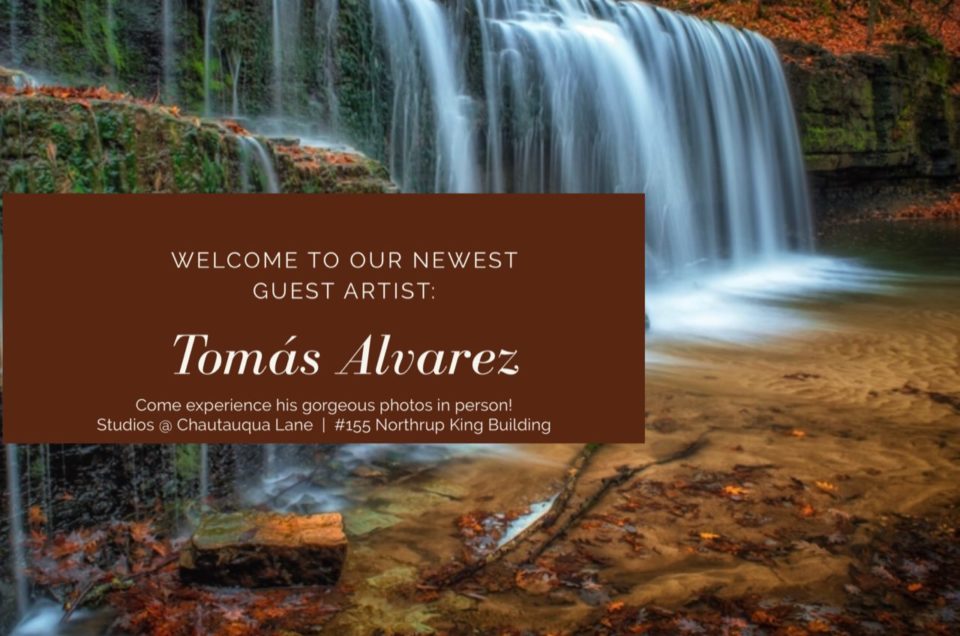
The Studios @ Chautauqua Lane
Northrup King Building, Studio 155
1500 Jackson St NE
Minneapolis, MN 55413
Each of us have certain milestones we want to achieve in our artistic careers. They could be winning awards, getting into an exhibition, making a first sale, or just being recognized for your work. I've always wanted to get into a studio. If I couldn't accomplish that, then I would participate in the art fair circuit and try and achieve sales that way. The art fair circuit is a lot of work, but I invested in the necessary materials to make it happen.
Then 2020 happened. Since the Coronavirus pandemic started, art fairs and festivals have all but disappeared. Rightfully so, and I feel for those whose livelihoods are deeply impacted by the situation.
As luck would have it, I was invited to be a guest artist at The Studios @ Chautauqua Lane. This, to me, was an opportunity of a lifetime! A get in the door, moment.
The studio is located in Minneapolis' Northrup King Building, studio #155 - the heart of the city's art district.
The studio is open every first Thursday of the month, and on Saturdays from noon to four. Art Attack is coming up in November and will be held in a virtual and in-person format.
We are operating under strict Covid-19 precautions as prescribed by the CDC, i.e. room capacity, mask requirement, etc.
“Study the past if you would define the future.”
― Confucius
Over the past ten years I've accumulated copious amounts of images.
Some are good.
Some are not so good.
During this time of lockdown, I have the capacity to look back and reflect upon the images that have taught me what I know now. I also have the time to reimagine what these images would look like if I were processing them with my current eye.
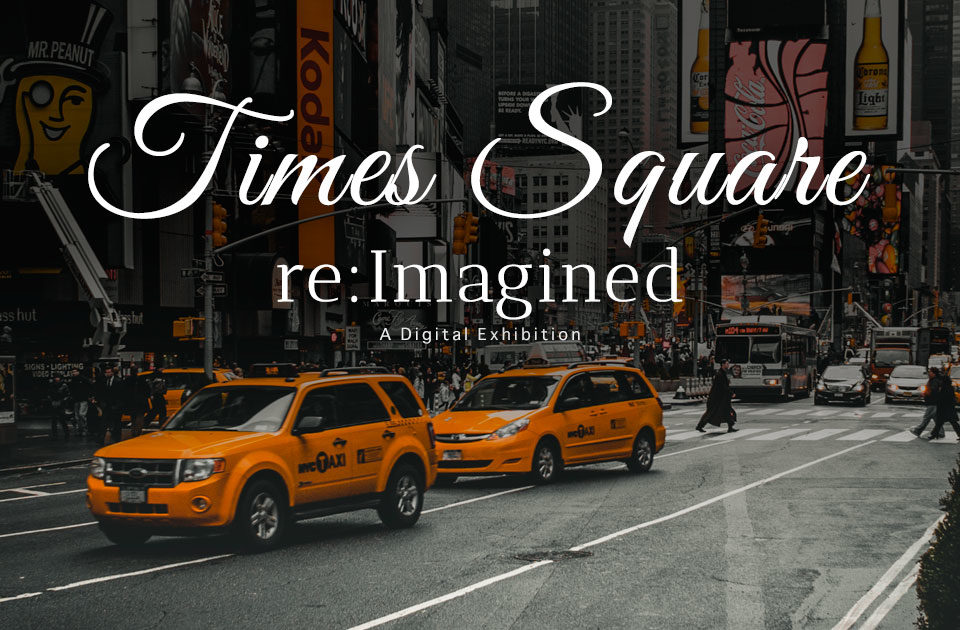
Through this process of rethinking comes re:Imagined. The re:Imagined digital exhibitions will be a fresher, riskier, take on old material. A new, more seasoned, eye, free of the desire to fit the mold.
re:Imagined exhibitions will be released on a bi-monthly cadence at first, starting in July, 2020, with Times Square re:Imagined.